Bowling Green Public Works highlights FY 2026
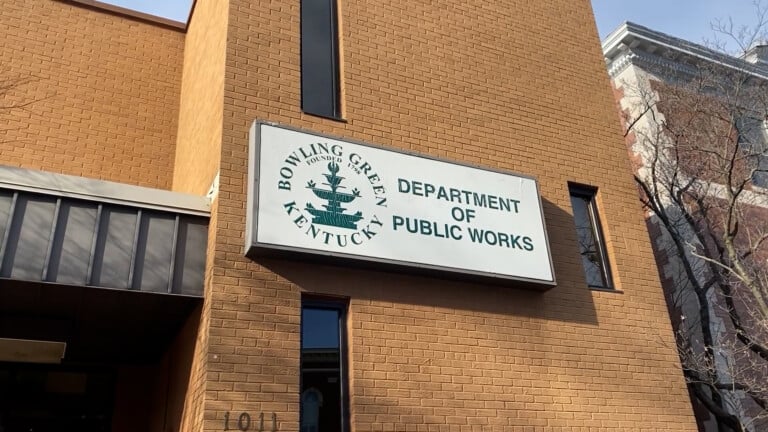
BOWLING GREEN, Ky. (WNKY) — Bowling Green Public Works is highlighting a year of emergency response, operational changes and first-time projects in its Fiscal Year 2026 annual report, including thousands of hours spent responding to snow and ice, a shortened leaf collection season, a new pavement preservation program and the city’s first solar lighting along portions of its greenway system.
Public Works Director Andy Souza said the department’s work ranges from the highly visible — such as snowplows and leaf trucks — to infrastructure and maintenance residents may rarely notice.
Crews respond to snow and ice
Public Works recorded 2,194 hours of snow and ice response during the fiscal year. The department’s annual report says crews treated 4,083 miles of snow routes and used 984 tons of deicer during a multi-day snow and ice event.
Souza said keeping roads open required crews to balance public safety with the timing and cost of applying deicer.
“When can we get out and get those roads open? People need to go to school. They need to work. We need to have those roads open for first responders to get to hospitals,” Souza said.
He said the cost of deicer increased from $149 per ton to nearly $200 per ton, creating another consideration for crews deciding when to begin treatment.
“So we don’t want to put it out too early. We want to kind of conserve our stock,” Souza said. “And also that deicer is a blessing and a curse. It helps keep the ice off the road as the temperatures drop, helps melt it a little bit faster. But it also eats our critical storm infrastructure.”
Four months of leaf collection cut to 30 days
One of the department’s biggest operational changes involved leaf pickup.
Bowling Green shortened its collection period from four months to 30 days while still collecting approximately 90% of its previous volume, according to the annual report. The department said the change saved time, fuel and taxpayer resources.
Souza said the longer collection season required Public Works to pull employees away from other responsibilities, including pothole repairs, making signs and maintaining traffic signals. Leaf collection also requires significant manpower and fuel, he said.
The program serves another purpose beyond removing leaves from neighborhoods. Souza said leaves and debris can block drainage infrastructure, making it important to keep them away from storm drains and other drainage points.
“We picked up 90% in one month. So as a taxpayer, that should be a win. We picked up over 1 million pounds,” Souza said. “That’s a lot of leaves that we’re getting off of our streets and out of our storm infrastructure.”
The annual report lists 705 tons of leaves picked up and recycled during the fiscal year.
City tests pavement preservation for first time
Public Works also began using pavement preservation for the first time.
Souza said the city traditionally mills and repaves about nine miles of roadway with a roughly $2 million budget. This year, the department also began testing products designed to extend the life of pavement already in place.
“We have never done that. So this year we’re doing it,” Souza said. “We have two different products that we’re doing sort of a demo with.”
Different sections of streets received the two products, allowing the department to compare how they perform over time. Souza said the results will not be immediate.
“We’re going to watch how well does that road hold up,” he said. “And this is not a quick answer. We’re not going to know tomorrow. We might know in two years.”
Souza said the broader goal is to preserve infrastructure while getting more value from existing resources.
“For the taxpayer, we really do. We don’t just say it, we are trying to save money,” he said.
Solar lighting comes to city greenways
Another first is visible along Bowling Green’s greenways.
Souza said solar lights have been added or are being installed along three sections of the system, marking the first time Public Works has used solar lighting there.
He said the greenways serve more than recreational users.
“People use them to go to work. They use them to go to class. They use them to go to the store and get groceries,” Souza said. “So as we get into the fall and winter months and it starts getting dark, we wanted those to be a little bit more well lit.”
Souza said Cemetery Road has 15 solar-light poles, while additional lights have been installed near Atlanta Way and work is underway on another section. He said solar also allows the city to avoid trenching, which can significantly increase installation costs.
The annual report describes the solar lighting initiative as an effort to improve pedestrian safety, increase energy efficiency and reduce maintenance costs.
A focus on taxpayer value
Souza said Public Works represented about 14 cents of every tax dollar this fiscal year, compared with 15 cents the year before.
He said that funding supports a wide range of responsibilities, including 24-hour response, road work, water testing, engineering, surveying and maintenance of city buildings.
For Souza, the projects highlighted in the annual report ultimately come back to maintaining the infrastructure residents rely on while finding ways to make those resources last longer.