BRASS shelter demand outpaces available beds
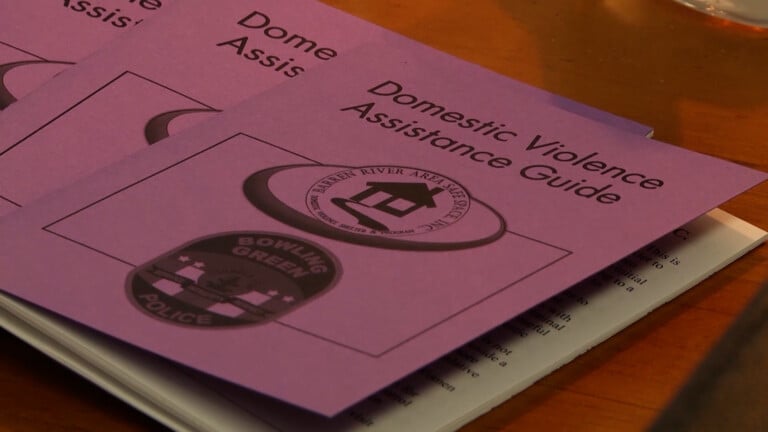
BOWLING GREEN, Ky. (WNKY) — Barren River Area Safe Space is turning away nearly as many crisis callers as it shelters because demand continues to outpace the space available at its emergency domestic violence shelter.
The strain comes as Kentucky’s 2025 Domestic Violence Data Report shows unmet shelter requests rose more than 15% statewide. On one day last September, domestic violence programs across the commonwealth were unable to meet 222 requests for services.
Hundreds seek shelter through BRASS
BRASS CEO Tori Henninger said the agency sheltered about 350 people last year but turned away nearly 300 crisis callers.
Because many callers are also seeking help for their children or other family members, Henninger estimates those unanswered requests represented closer to 400 people.
“You know, we brought into shelter last year, right, at 350 people, and we’ve turned away almost 300 crisis callers, which we estimate to be closer to 400 people, because every caller has other people to consider,” Henninger said.
One call does not always represent one person, she said. Some survivors are trying to find safety for two, three or four people at once.
Shelter remains near capacity
BRASS serves survivors across 10 counties, but its emergency shelter has only 30 beds.
Henninger said the shelter is at capacity about 99.9% of the year. When someone moves out, employees clean the room, replace the bedding and prepare it for another survivor.
“We are at our capacity about 99.9% of the year. Very rarely do we have a bed go open for more than 24 hours,” Henninger said. “We consistently are bringing people in. And once they’re moving out, we take enough time to kind of flip the room and clean it and put new bed sheets on it and make sure that it’s ready to go for the next survivor, who’s probably calling while we’re cleaning the room.”
The lack of immediate shelter can come at a particularly dangerous moment. Henninger said leaving an abusive relationship is not as simple as walking away or ending the relationship.
“What we have to recognize is that when a survivor decides to flee, it is absolutely one of the most dangerous times in the cycle of domestic violence,” Henninger said.
Advocates look for alternatives
When BRASS cannot provide a bed, advocates work with survivors to develop safety plans.
They may contact other domestic violence shelters or homeless shelters. Advocates also explore whether family members, friends, churches or other community resources can provide temporary help.
Henninger said those options require flexibility because the resources a survivor needs may not be readily available.
The hardest conversations come when someone has taken the step of asking for help, only to learn that the shelter cannot provide the assistance that person expected.
“And there are people who are willing to hear me, listen to me. Believe me,” Henninger said. “And we do all those things and still have to say, unfortunately, we can’t help you the way that you want to be helped right now.”
Henninger said needs that appear straightforward can become complicated by insurance requirements, employment, transportation, children and the county where a survivor lives.
“It should be easy to be able to help a person have a safe bed,” Henninger said. “It should be easy to help a person have food to eat. It should be easy to help a person get to their medical appointments.”
Longer stays limit available beds
The shortage of affordable housing is also making it harder for survivors to leave the shelter and establish stable housing.
Henninger said BRASS’ average shelter stay has increased from about 20 days before the COVID-19 pandemic to more than 60 days. For an adult with at least one child, the average is closer to 75 days.
The longer stays mean rooms do not become available as quickly for the next person seeking emergency shelter.
Survivors may call more than once
BRASS answers about 3,000 crisis calls each year, but those calls do not always come from 3,000 different people.
Some survivors call several times as they gather information, make plans and wait for a safe opportunity to leave.
“Sometimes that is one person calling four or five times to plan, to plot, to be ready when they are safely able to escape,” Henninger said. “And that takes time and that takes attention and that takes effort.”
Henninger estimated that a survivor may call between two and five times before taking the next step.
Community urged to contact lawmakers
Henninger said community members can help by following BRASS online for calls to action involving state and federal funding.
She encouraged residents to contact their local, state and federal representatives when funding decisions affecting domestic violence programs are being considered.
“I can’t tell you enough about how great that would be if we had more people calling our local legislators and saying, please support survivors,” Henninger said.
Henninger said less than 5% of BRASS’ funding currently comes from individual community contributions. As traditional grant funding changes, she said the agency will increasingly need local support to maintain its shelter and round-the-clock crisis services.