May is Stroke Awareness Month: Glasgow doctor becomes a patient
GLASGOW, Ky.- May is Stroke Awareness Month, and healthcare officials say there’s been an increase in stroke cases.
According to the American Heart Association, in 2023, someone died of a stroke every three minutes and 14 seconds. Studies have found that over 160,000 people died of a stroke in the same year.
William Thornbury, a physician, MD at T.J. Regional Health, said, “If it can happen to me, it can happen to you and your family member. Remember to be grateful for your life every day and do everything you can to preserve it.”
He was diagnosed with an acute stroke last year.
Thornbury said what once was a regular day in the clinic turned into an emergency, but this time with him on the gurney.
“I went home for a quick lunch, and I had a 2 o’clock appointment, and I was making myself some lunch, and I began to cough,” he said.
A simple symptom that took a quick turn. He said he began to notice classic signs of a stroke.
“My speech was slurred, and my children noticed it. My face began to droop,” he said. “This is not normal, and, fortunately, they had called my wife, who came in when she saw me, immediately took me to my local health system, T. J. regional,” Thornbury said.
A MRI machine diagnosed Thornbury with an early stroke.
Strokes have been rising in numbers in the emergency room. According to Johns Hopkins Medicine, strokes are caused by restricted blood flow to the brain.
Contributing factors include high blood pressure, heart disease, diabetes, smoking, obesity and more. Thornbury said a healthy change in your lifestyle can save your life.
“What can we do before we get to a stroke? We’re seeing strokes in younger people. You know we want to get those things controlled if we can. Can we avoid tobacco products? Can we avoid heavy alcohol use? Can we keep our blood pressure and our diabetes and other chronic health conditions like high cholesterol under control,” he said.
Ways to identify a stroke starts with the ‘be fast’ protocol.
- B– Are the balance of the person off?
- E– Is the person having vision (eye) disturbances?
- F– Pay attention to their face. Is it drooping?
- A– Is one or both of their arms numb or weak?
- S– Does the person have slurred speech?
- T– If all of these symptoms check off, it’s time to call emergency services.
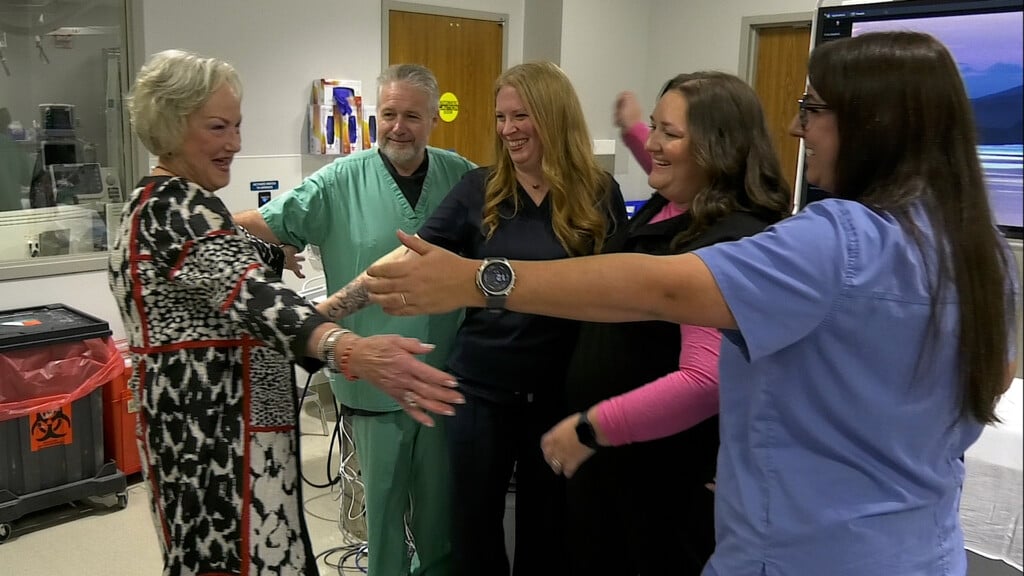
Thornbury said the same people he works with are the heroes without capes that saved his life.
“I’ve come to the community to try to make that community better or make that health system better. That same health system in stroke rating care and saved my life and save other families lives every day.”