Kentucky ranks 8th in fatal interstate truck crashes
BOWLING GREEN, Ky. — Kentucky ranks eighth nationwide for the rate of fatal crashes involving large trucks on interstate highways, according to a new analysis examining crash data from 2020 through 2024.
The analysis found 345 fatal crashes involving large trucks on Kentucky interstates during that five-year period, an average of 69 per year.
Kentucky recorded a rate of 1.50 fatal large-truck crashes per 100,000 residents, about 1.75 times the national average of 0.857.
The analysis, conducted by DeHoyos Accident Attorneys, used data from the National Highway Traffic Safety Administration’s Fatality Analysis Reporting System and U.S. Census Bureau population estimates.
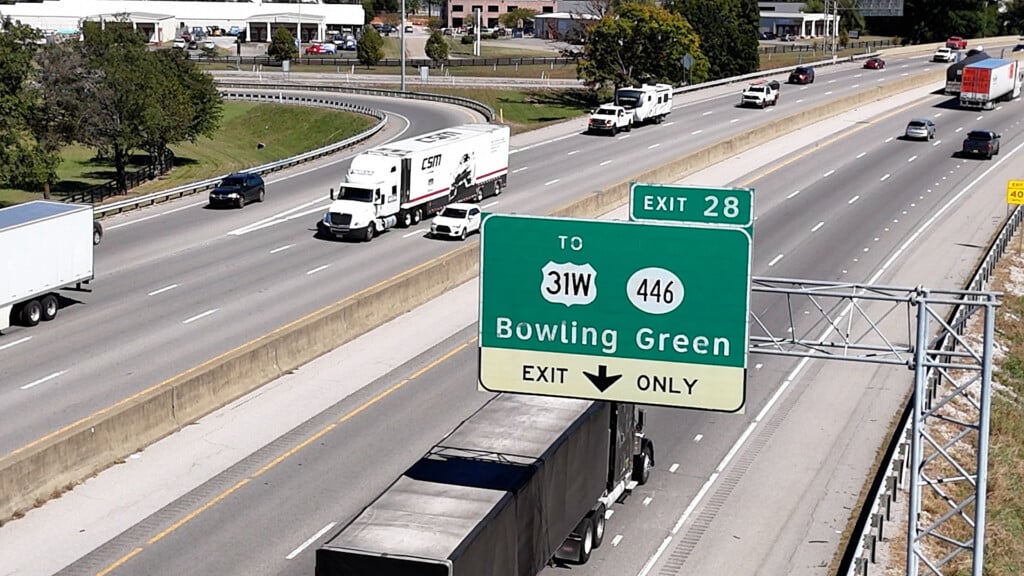
Kentucky’s position along major freight corridors, including Interstate 65, means thousands of commercial trucks travel through the state each day.
The numbers are reflected on roadways around Warren County.
A local analysis of commercial-truck crashes found 583 crashes in Warren County over a five-year period, resulting in four fatalities and 94 injuries. Interstate 65 accounted for 203 of those crashes, including two fatalities and 53 injuries.
Kentucky State Police Post 3 Public Information Officer Katan Parker said troopers see truck crashes on I-65 for a variety of reasons.
“Absolutely. Too many of them,” Parker said when asked whether the number of truck crashes lines up with what KSP sees.
Parker said fatigue is one factor involving commercial truck drivers, but speeding, following too closely and distracted driving, can also contribute to crashes.
He also pointed to a specific stretch of I-65.
“The most dangerous driving is between Exit 6, Franklin, and Exit 20 in Bowling Green,” Parker said.
Parker said passenger-vehicle drivers also need to be aware of how they position themselves around large trucks. He encouraged drivers to avoid spending extended periods driving between two tractor-trailers and said drivers should move over when they encounter a truck stopped along the interstate.
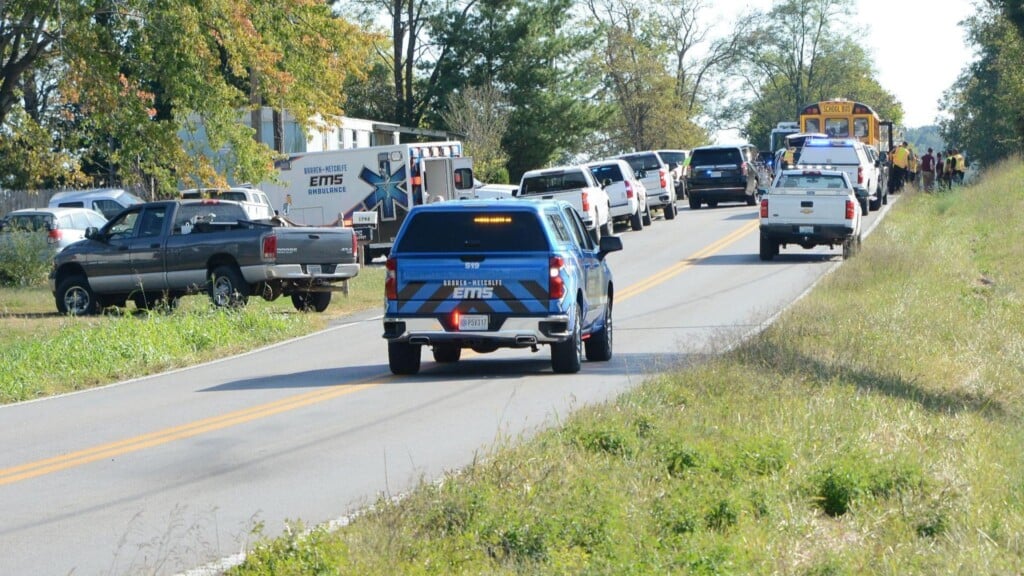
For Joe Akers, terminal manager and rotator operator for Candido’s Towing and Recovery, the statistics have a more direct meaning. He regularly responds to serious crashes involving tractor-trailers.
Akers said the severity of those crashes can range from a tractor-trailer overturned across the interstate to multiple trucks becoming involved in the same collision.
“A semi can cause an accident in five minutes. It takes 14 hours to clear it,” Akers said.
Recovering a tractor-trailer is significantly different from removing a passenger vehicle, according to Akers.
A passenger vehicle can often be loaded and removed relatively quickly, while a commercial truck crash can require lanes or even an entire roadway to remain closed for hours.
Akers said responders can also face additional hazards when working around large trucks, including hazardous materials.
He recalled responding to a crash involving a material that became hazardous after it escaped its original container. The interstate had to remain closed for a significant amount of time.
Akers also raised concerns about the increasing use of technology in commercial trucks.
He said newer trucks can have features such as radar, lane-departure detection and other driver-assistance technology. In his experience, he said those features can sometimes cause drivers to become less engaged behind the wheel.
Akers also pointed to electronic logging systems and other technology used in the trucking industry, saying there are mixed feelings among drivers about some of the changes.
He said distracted driving remains a concern, including drivers using their phones while behind the wheel.
Akers said drivers also need to understand how much space a loaded tractor-trailer needs to stop.
“A load of tractor trailer weighs 80,000. Give them space. It takes time to stop,” he said.
He urged drivers not to cut off large trucks or immediately brake after moving in front of them.
“Don’t crowd them. Don’t cut them off and then hit your brakes,” Akers said.
Tyreon Satterfield works as a yard dog at Fruehauf and also drives over the road on weekends. He said he is on I-65 every week.
Satterfield said one of the most dangerous things he sees is passenger vehicles cutting in front of tractor-trailers without leaving enough room.
“You’ve got 80,000 pounds behind you. It’s a very scary situation when you’re trying to brake to make sure you avoid a collision,” Satterfield said.
He said drivers should also understand the blind spots around a 53-foot trailer.
“If the driver can’t see the mirrors, then we can’t see them,” Satterfield said.
Satterfield said drivers should either get around a truck or slow down and fall behind it.
“Don’t sit beside a semi too long. Try to get either past him or slow down and get behind him. Don’t ride beside him,” Satterfield said.
He also said construction zones can be particularly difficult for truck drivers because lanes become narrower and there is less room for error.
Among Kentucky’s seven bordering states, only Tennessee has a higher per-capita rate of fatal large-truck crashes on interstate highways. Tennessee ranks sixth nationally at 1.78 per 100,000 residents.
Missouri ranks 12th nationally at 1.39, while Indiana ranks 13th at 1.35. West Virginia ranks 20th at 1.05, while Ohio and Illinois each have a rate of 1.00. Virginia has the lowest rate among Kentucky’s neighboring states at 0.93.
Fruehauf is also currently hiring at its Bowling Green facility.
For drivers sharing the road with tractor-trailers, the message from law enforcement, truck drivers and those who respond to crashes is consistent: give large trucks plenty of room, avoid their blind spots, don’t cut them off and move over when approaching a stopped vehicle on the shoulder.