News 40 Weather Reports: What is WBGT? Understanding the heat measurement used during Kentucky football practices
BOWLING GREEN, Ky. (WNKY) – For high school football players practicing in the late-summer heat, the temperature on a thermometer is only part of the picture.
Coaches and medical staff are also monitoring wet bulb globe temperature, or WBGT, a measurement that accounts for multiple environmental factors to determine heat stress.
“WBGT differs from the heat index,” said Shane Holinde, outreach manager for the Kentucky Mesonet. “The heat index is taking in the temperature and the humidity. The wet bulb globe temperature takes in the air temperature, the wind speed, the sun in particular, the sun angle, humidity as well as cloud cover.”
The measurement has been used for decades, Holinde said, but has become more common in sports and other outdoor activities as a way to determine when conditions become too hot.
For football, the timing can be particularly important. Practices often take place during the afternoon, when WBGT can be at its highest.
“Late day, which is right around the time of football practice after school lets out, is the time of day this time of year in particular, when the wet bulb is going to run the highest,” Holinde said.
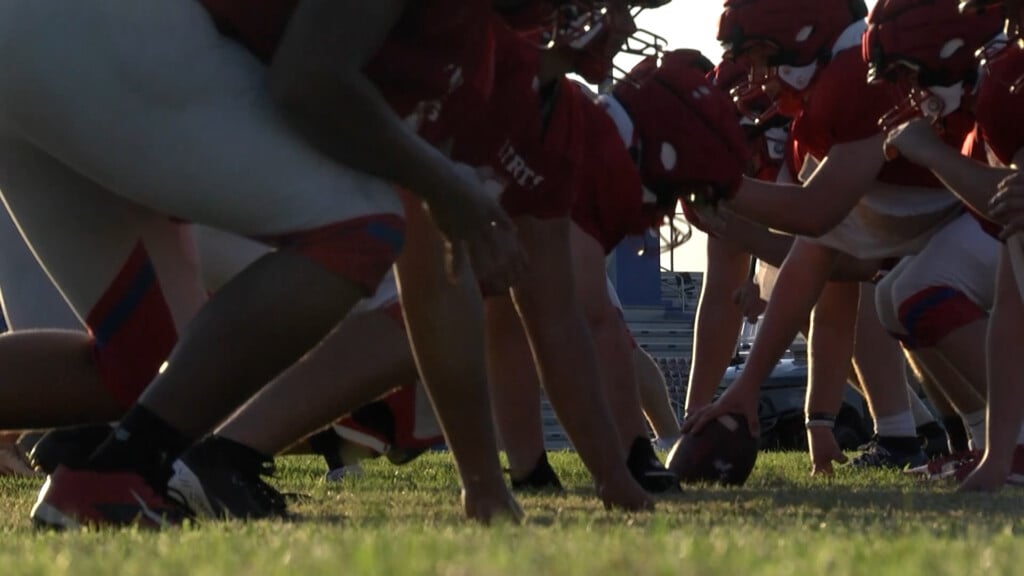
The conditions can create additional challenges for football players because of the protective equipment they wear.
Noel Belcher, sports outreach coordinator at Med Center Health, said athletes are at greater risk for heat illness when exercising in hot and humid conditions.
“Just due to the nature of football with the excessive equipment,” Belcher said. “So they have helmets, shoulder pads on their body temperature is going to raise more quickly than someone without protective equipment on. So they’re more at risk for heat illness.”
Kentucky guidelines use WBGT thresholds to determine when football practices and other outdoor activities need to be modified.
Belcher said a WBGT above 90 can prompt significant changes to football practices, including removing equipment and delaying games.
“When it’s above 92, then all outdoor sports cease at that time,” Belcher said.
Medical staff also emphasize hydration. Belcher said athletes should replace the fluids and electrolytes they lose during practices and games.
Athletes and coaches should also watch for signs of heat illness, including excessive sweating, nausea and vomiting.
“Typically, we want to treat those athletes proactively,” Belcher said. “We want to encourage to replace fluids, and electrolytes.”
The Kentucky Mesonet provides WBGT readings that update every five minutes on their website, allowing conditions to be monitored as they change throughout an outdoor practice or game.